Students Contribute to Smarter Hydropower Investments
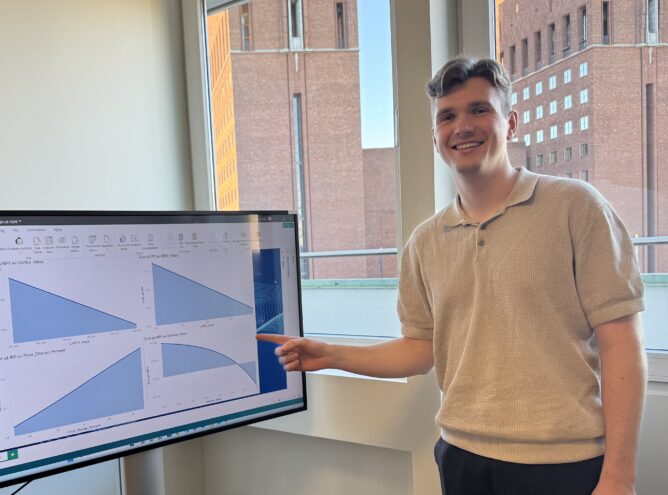
This autumn, two master’s students from BI Norwegian Business School, Maria Bjørgo and Benjamin Lange, completed an internship project at Clemens Kraft. Over the course of two intensive months, they developed a beta version of a new and user-friendly investment model for small-scale hydropower plants.
– The goal is for the students to develop something we can continue to use. The students have challenged us, asked good questions and contributed new perspectives. The tool they have helped us develop can contribute to better decisions in early-stage projects, says Håkon Grødem Reine, Head of Business Intelligence at Clemens Kraft, who supervised the students.
From Theory to Practice
Benjamin studies Business Analytics and Maria studies Business Administration, and both completed the internship as part of a dedicated course at BI. The students were given access to office space and close follow-up throughout the process.
– It is something completely different to work on real-world issues than to sit in the library, says Benjamin. – We have been able to apply the theory from our studies in practice and have learned a great deal about both technology and the industry.
A New Model for Small-Scale Hydropower Investments
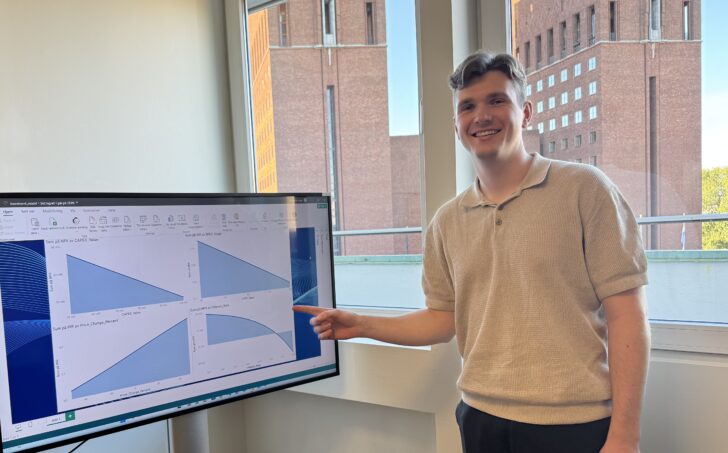
The students were tasked with further developing the existing investment model, which was in an Excel format, into a more user-friendly and flexible tool. The result was an app with a graphical user interface, developed in Python, which makes it possible to simulate different scenarios and assess the profitability of small-scale hydropower projects.
– The user can enter data such as costs, inflation, loans, prices and expected production, and have both costs and future income calculated, Benjamin explains. – The model also takes uncertainty into account and makes it possible to conduct «what-if» analyses.
New Insights and Better Decisions
For Clemens Kraft, the model provides a better basis for assessing which projects should be prioritised.
– We have a list of potential power plants, but we cannot develop them all. The tool can help us compare them more quickly and accurately, says Håkon Grødem Reine. – The students have shown us that we can adopt new tools that can lead to better investment decisions.
Learning in Both Directions
– This is the fourth autumn we have had students with us, and we always find that we gain a great deal from it. It is healthy to bring in new ideas and perspectives, he says.
Both Maria and Benjamin are taking valuable experience with them into the job application process.
– Now we have something concrete to show for ourselves – a product we have developed from scratch, says Maria. – We have learned that it is possible to create more efficient models. We hope that what we have done can facilitate and streamline further work. She adds that the two have gained a better understanding of the hydropower industry and the risks that are part of the overall picture and everyday work.
– And in practice, we have learned how to adopt new technology. That will be useful going forward!